Ebumi Shrine | 江文神社
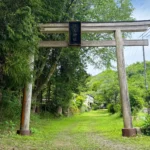
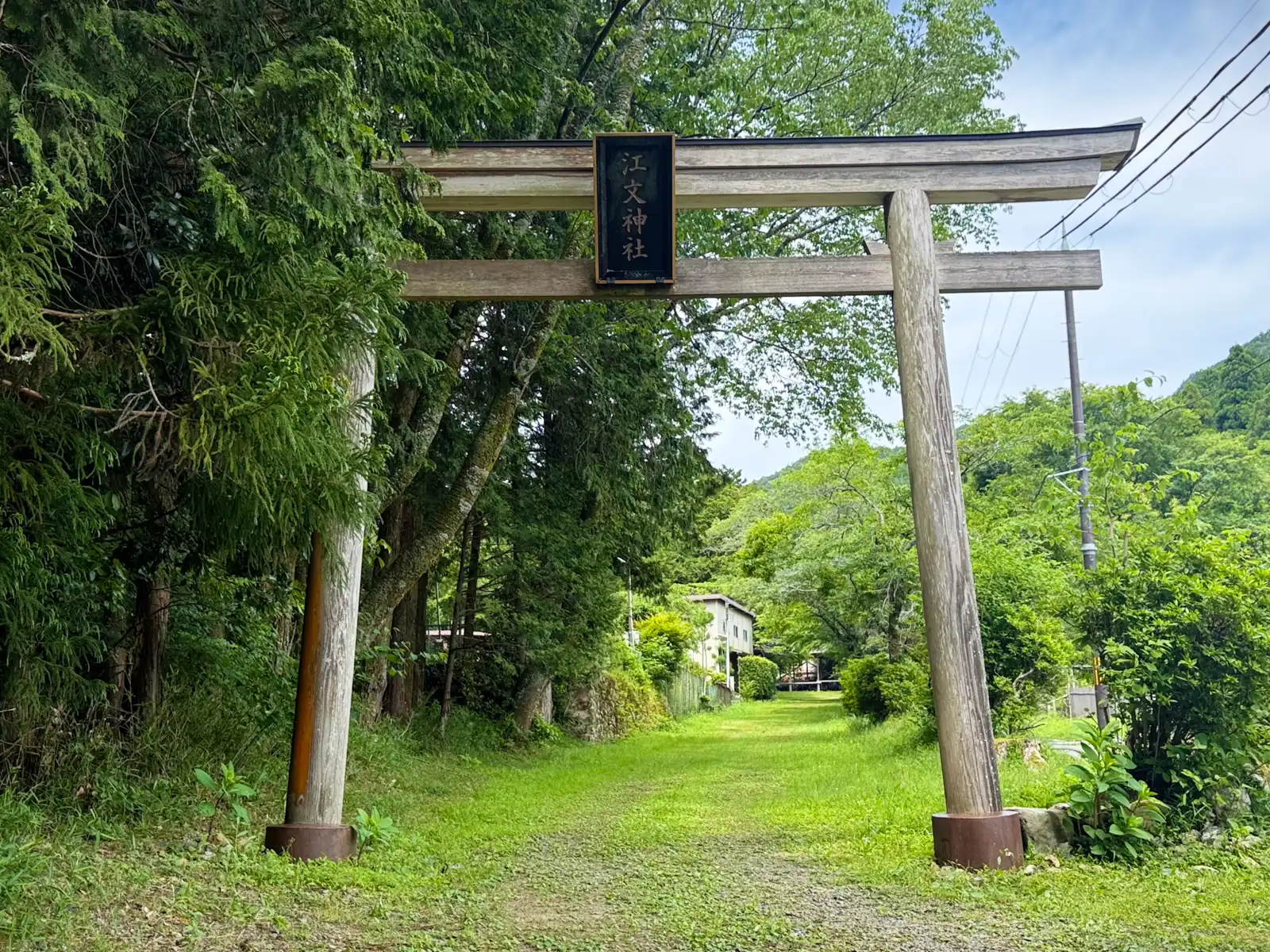
The weathered wooden torii at the entrance to Ebumi Shrine, its plaque reading 江文神社. A grass-covered path leads in from the edge of Ohara toward the forested foot of Mt. Konpira.
江文神社の入口に立つ、風化した木の鳥居。扁額には「江文神社」とある。大原の集落のはずれから、金毘羅山の麓の杜へと草の参道が続く。
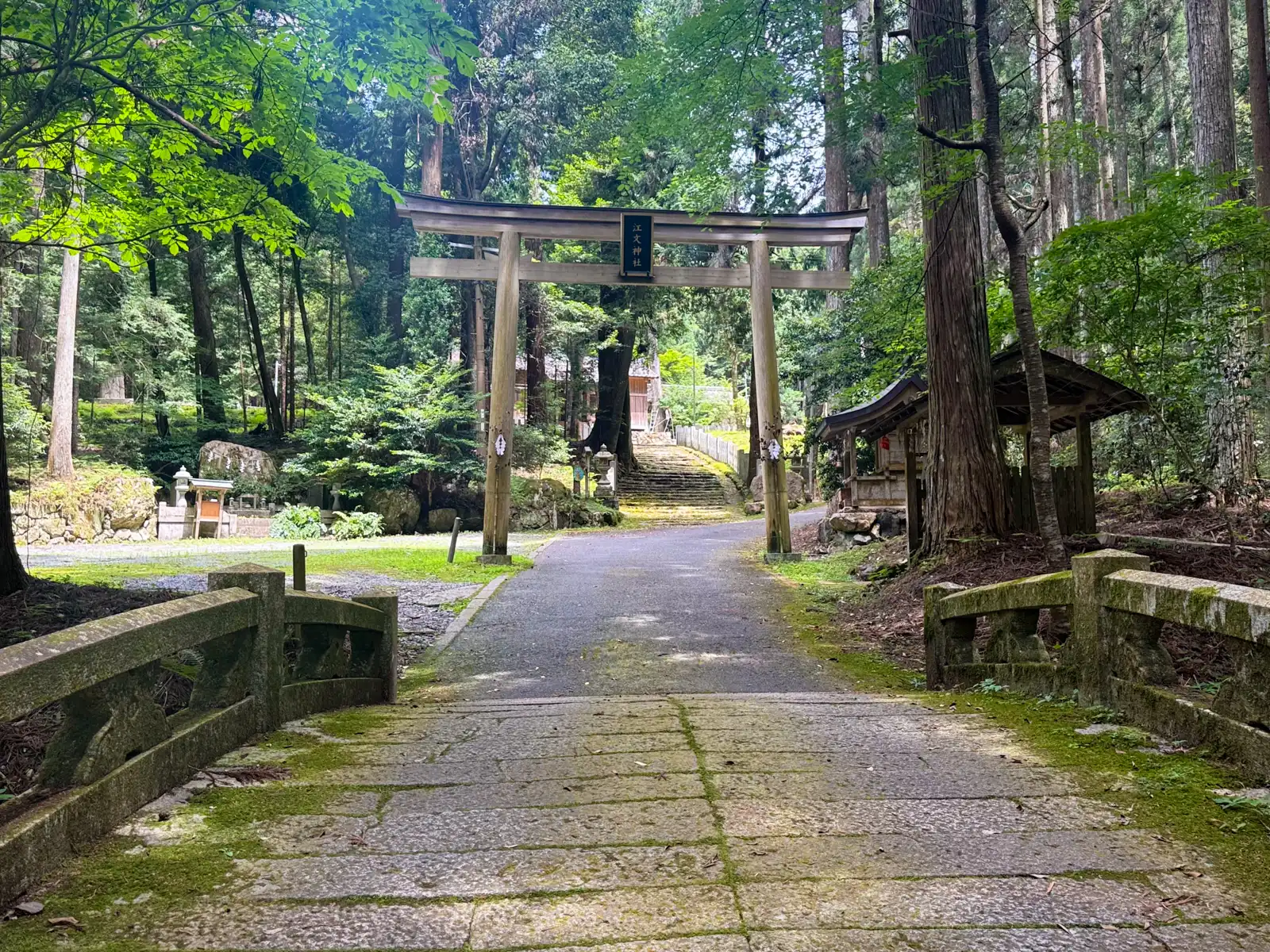
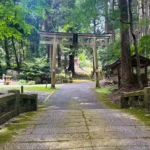
A moss-edged stone bridge and a second torii mark the approach into the shrine’s cedar grove. Stone lanterns line the paved path as it rises toward the steps ahead.
苔むした石橋と二の鳥居が、杉木立へと続く参道の入口を示す。石畳の道沿いに石灯籠が並び、奥の石段へと上っていく。
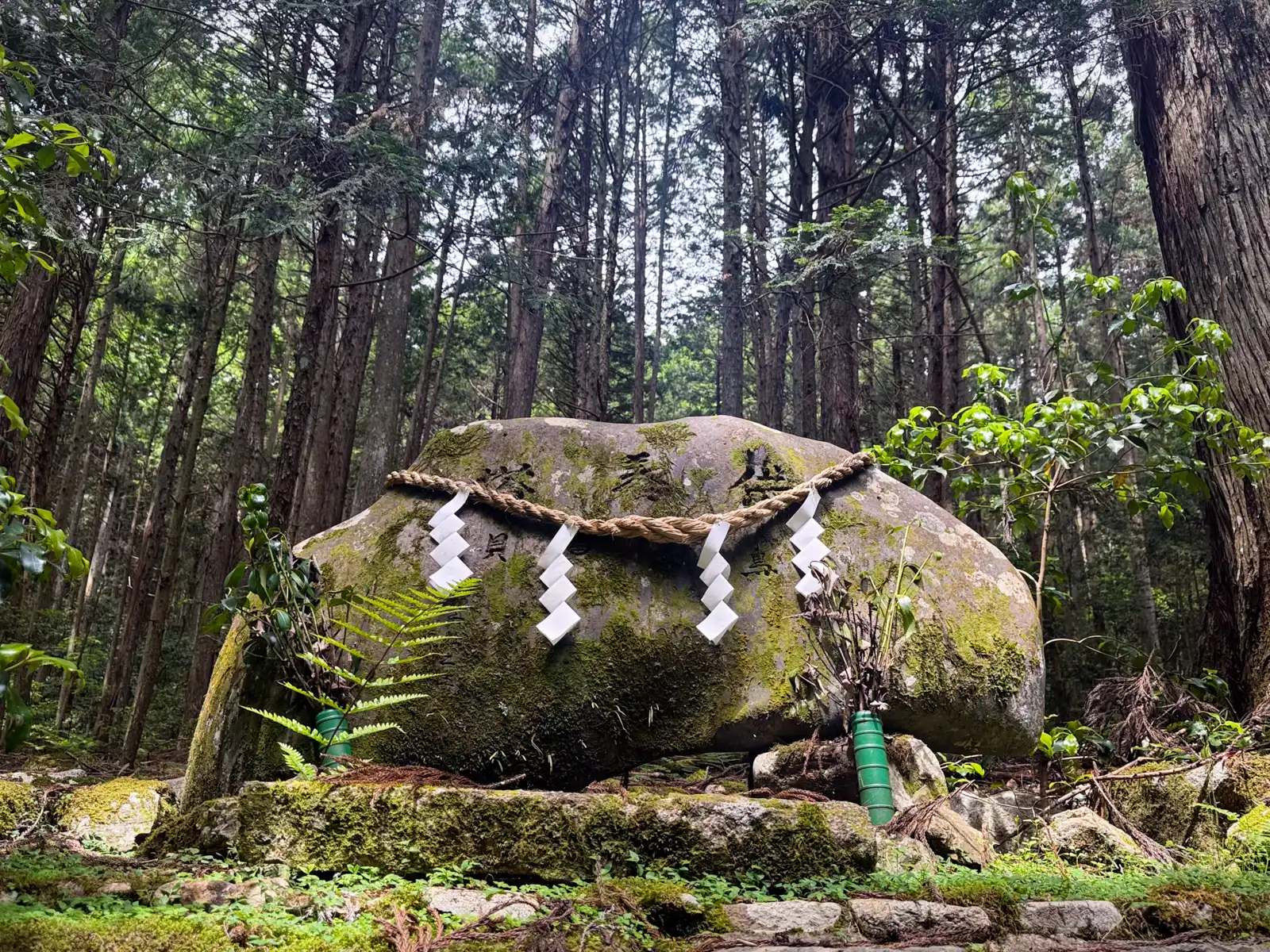
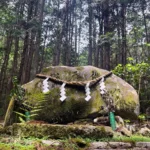
A great moss-covered boulder bound with a shimenawa rope and white shide streamers, marking it as sacred. It stands among the tall cedars that make up the shrine’s sacred grove.
注連縄と白い紙垂を掛けられた、苔むす巨岩。しめ縄が張られ、神聖な岩として祀られている。社叢をなす杉の高木の間に鎮座する。
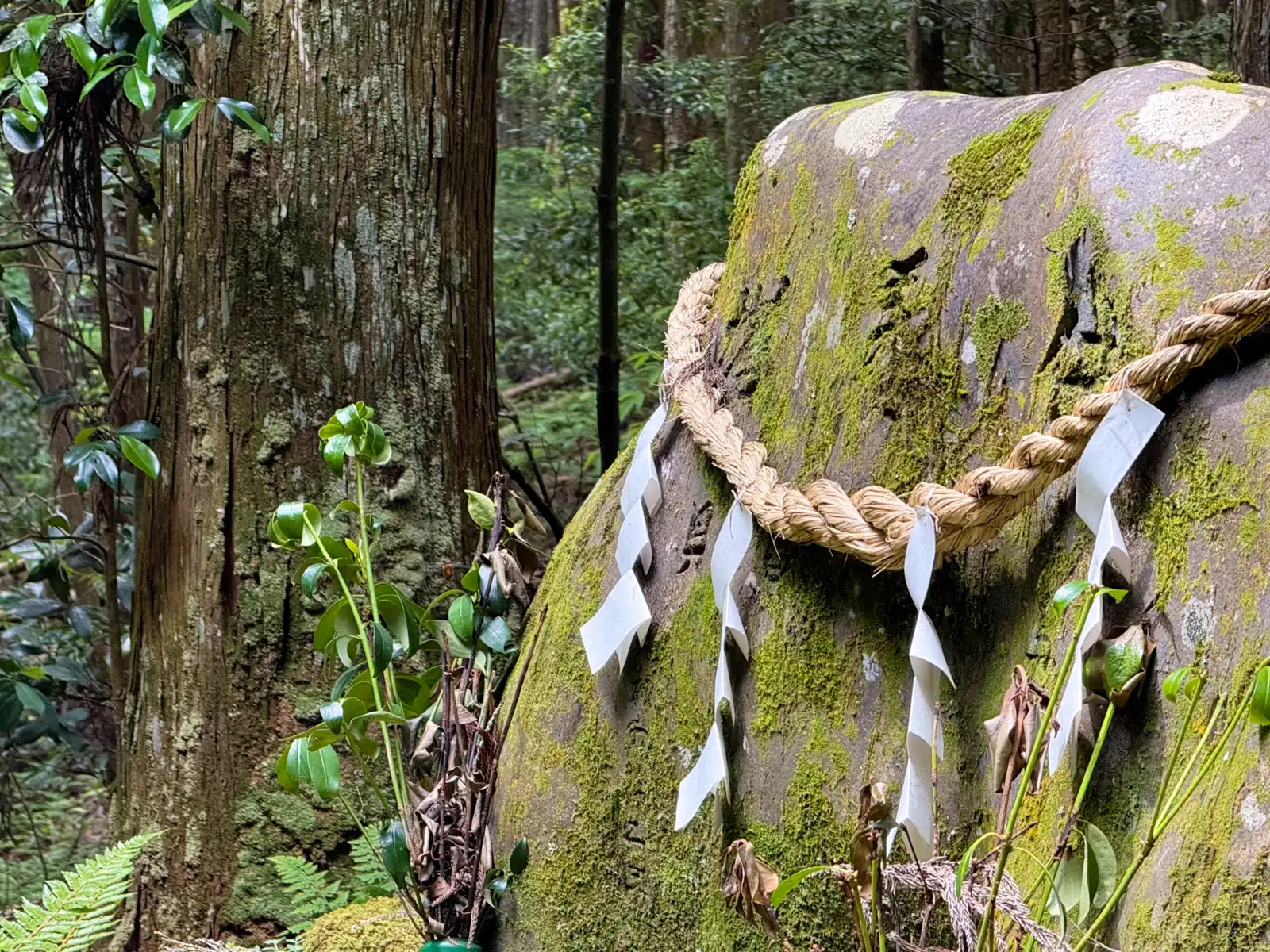
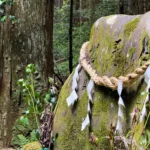
Detail of the sacred boulder: a thick twisted-straw shimenawa and folded paper shide, with moss filling every hollow. A massive cedar trunk rises alongside.
磐のしめ縄と紙垂の拡大。太い藁縄と折られた紙垂、窪みを埋める苔。傍らには杉の大木がそびえる。
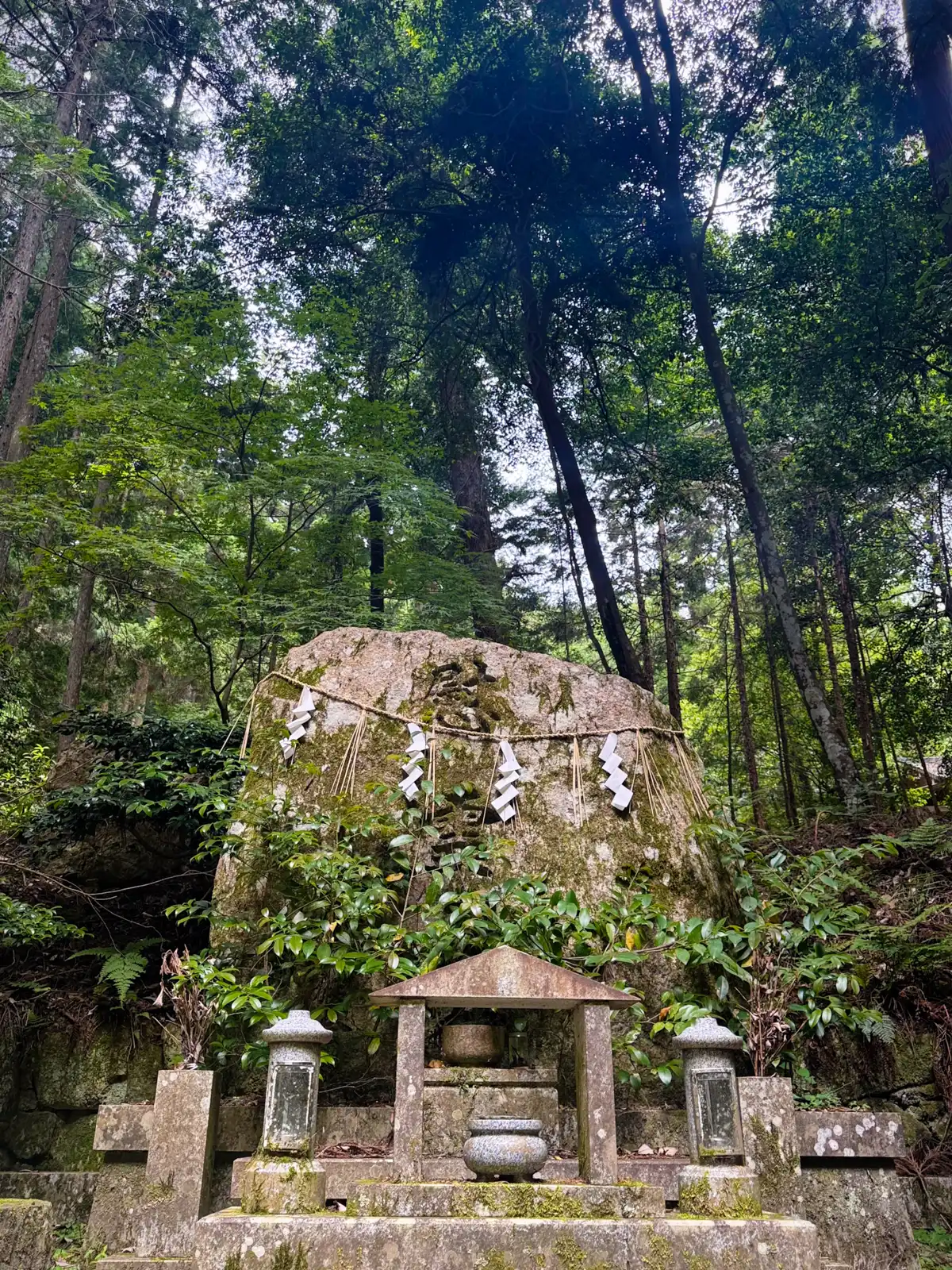
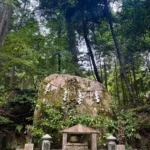
Below the roped boulder sits a small stone shrine flanked by a pair of stone lanterns and a stone offering vessel, tucked beneath towering cedars on the hillside.
しめ縄の巨岩の下に、一対の石灯籠と石の供物台を伴う小さな石祠が据えられている。斜面にそびえる杉の下にひっそりと佇む。
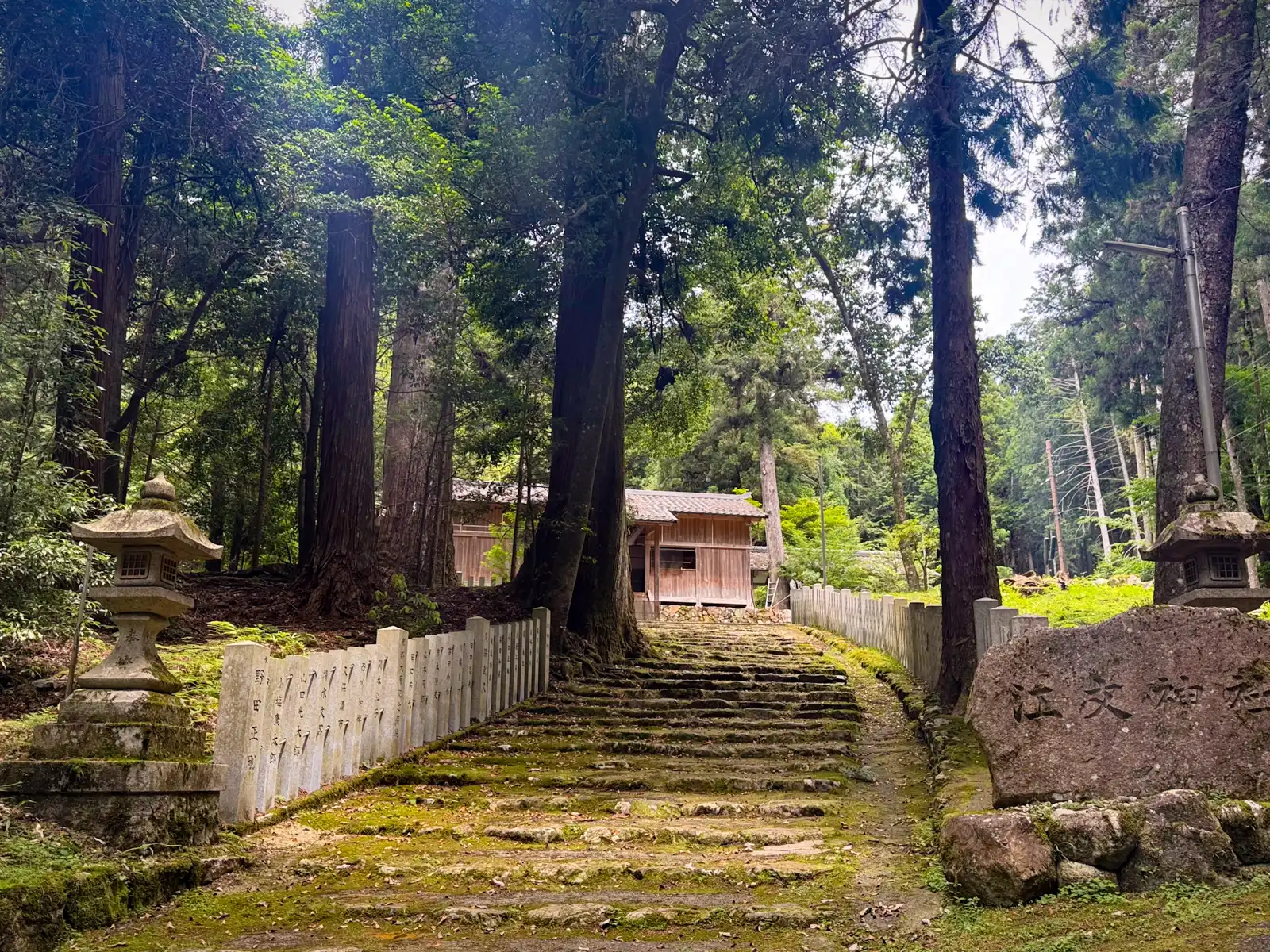
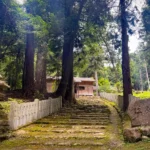
Moss-covered stone steps climb between stone lanterns and a low inscribed balustrade. The boulder at right is carved 江文神社; the shrine halls wait among the cedars above.
石灯籠と寄進者名を刻んだ低い玉垣の間を、苔むした石段が上る。右の石には「江文神社」と刻まれ、上方の杉木立に社殿が控える。
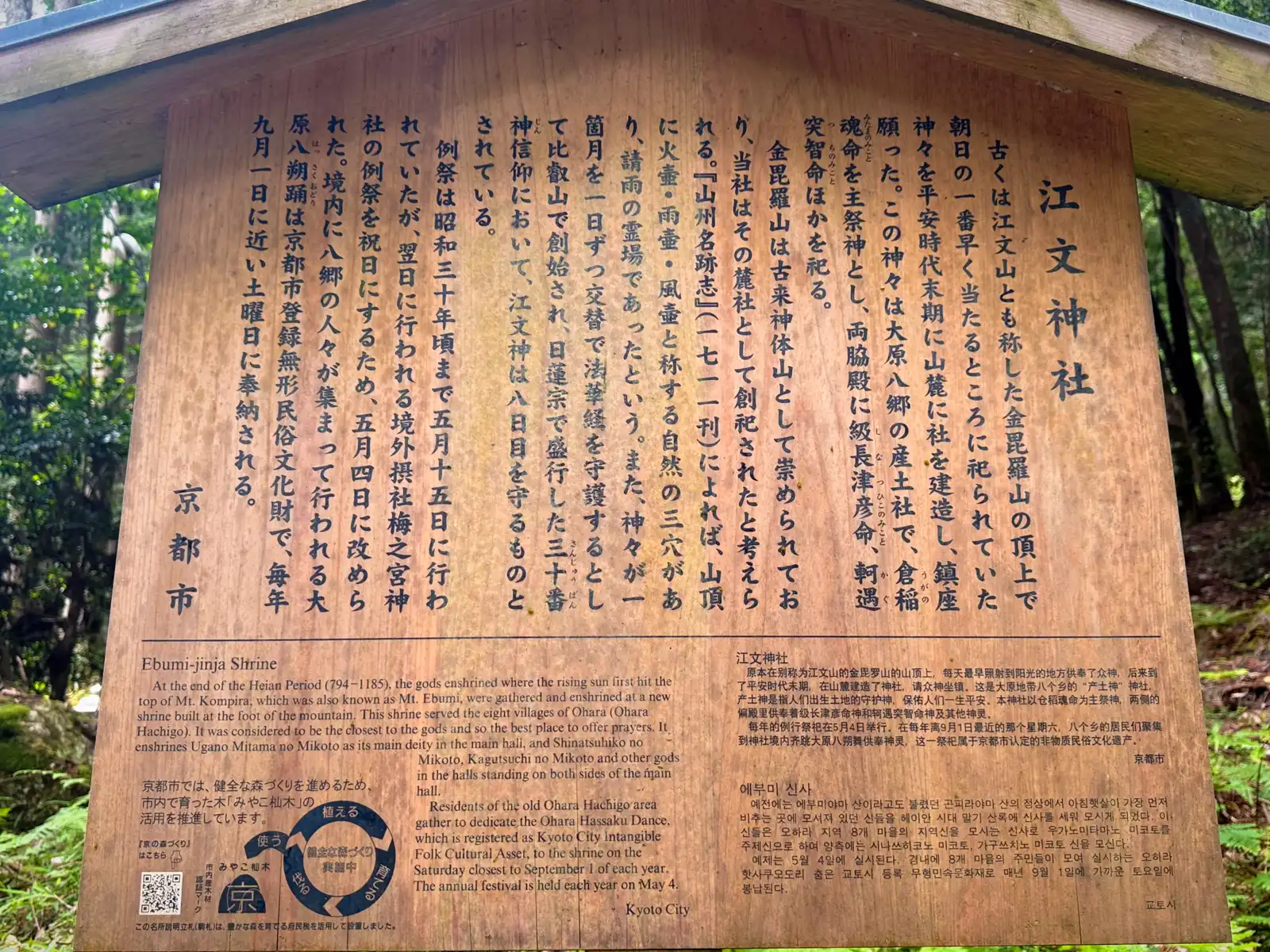
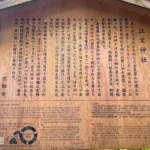
The Kyoto City information board for Ebumi Shrine, in Japanese, English, and Korean. It records that, at the end of the Heian period (794–1185), deities once worshipped atop Mt. Ebumi (Mt. Konpira) were gathered into a new hall built at the mountain’s foot to serve the eight villages of Ohara.
京都市による江文神社の案内板(日本語・英語・韓国語)。平安時代末期、江文山(金毘羅山)の山上で祀られていた神々を麓に社殿を建てて遷し、大原八郷の氏神としたことが記されている。
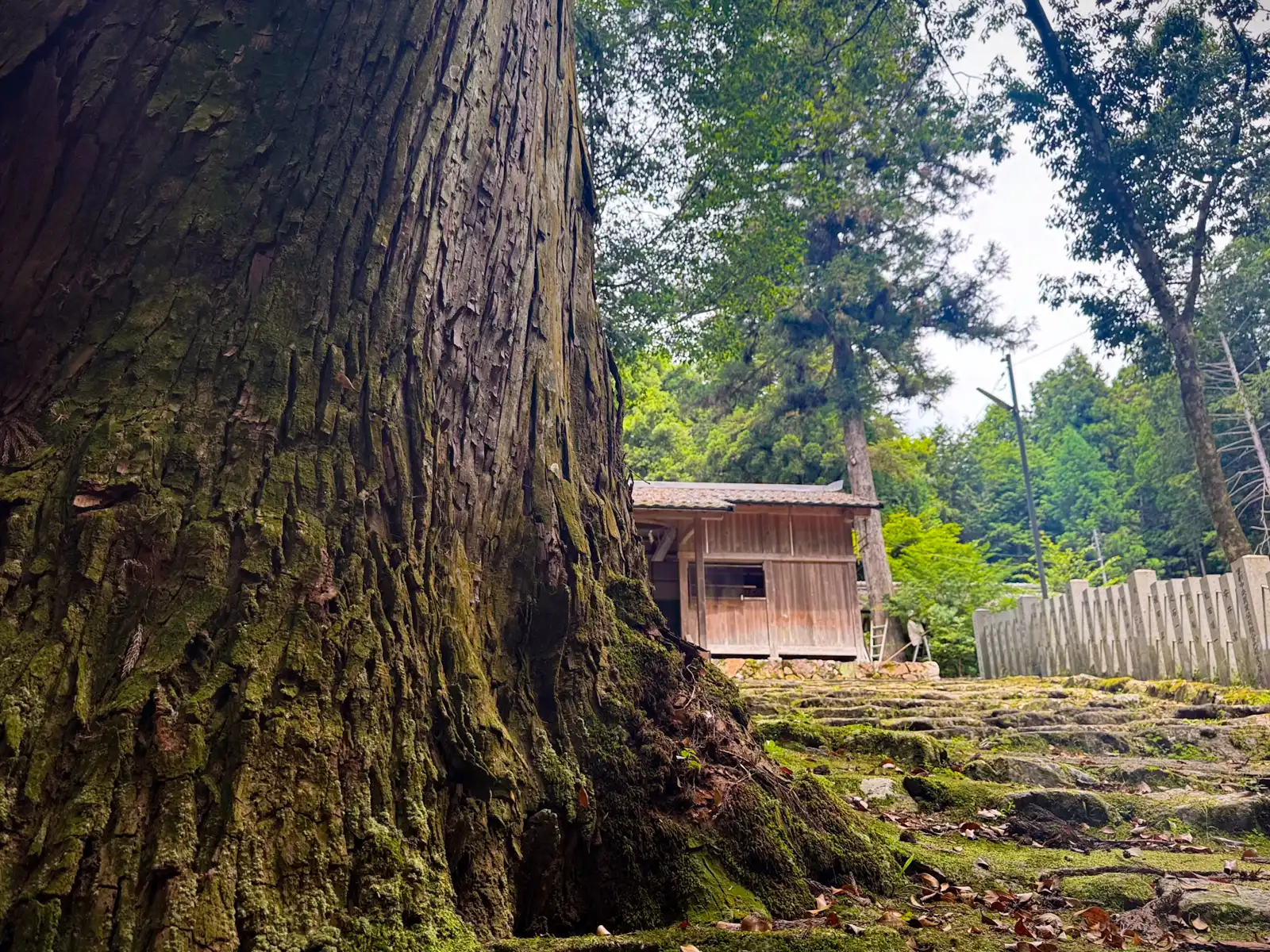
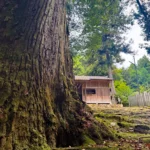
The mossy base of one of the shrine’s great cedars, its roots spread over the ground. An open-sided wooden hall stands beyond, on the mossy upper terrace.
社の大杉の一本、苔むした根元が地面に広がる。奥の苔の上段には、壁のない木造の建物が建つ。
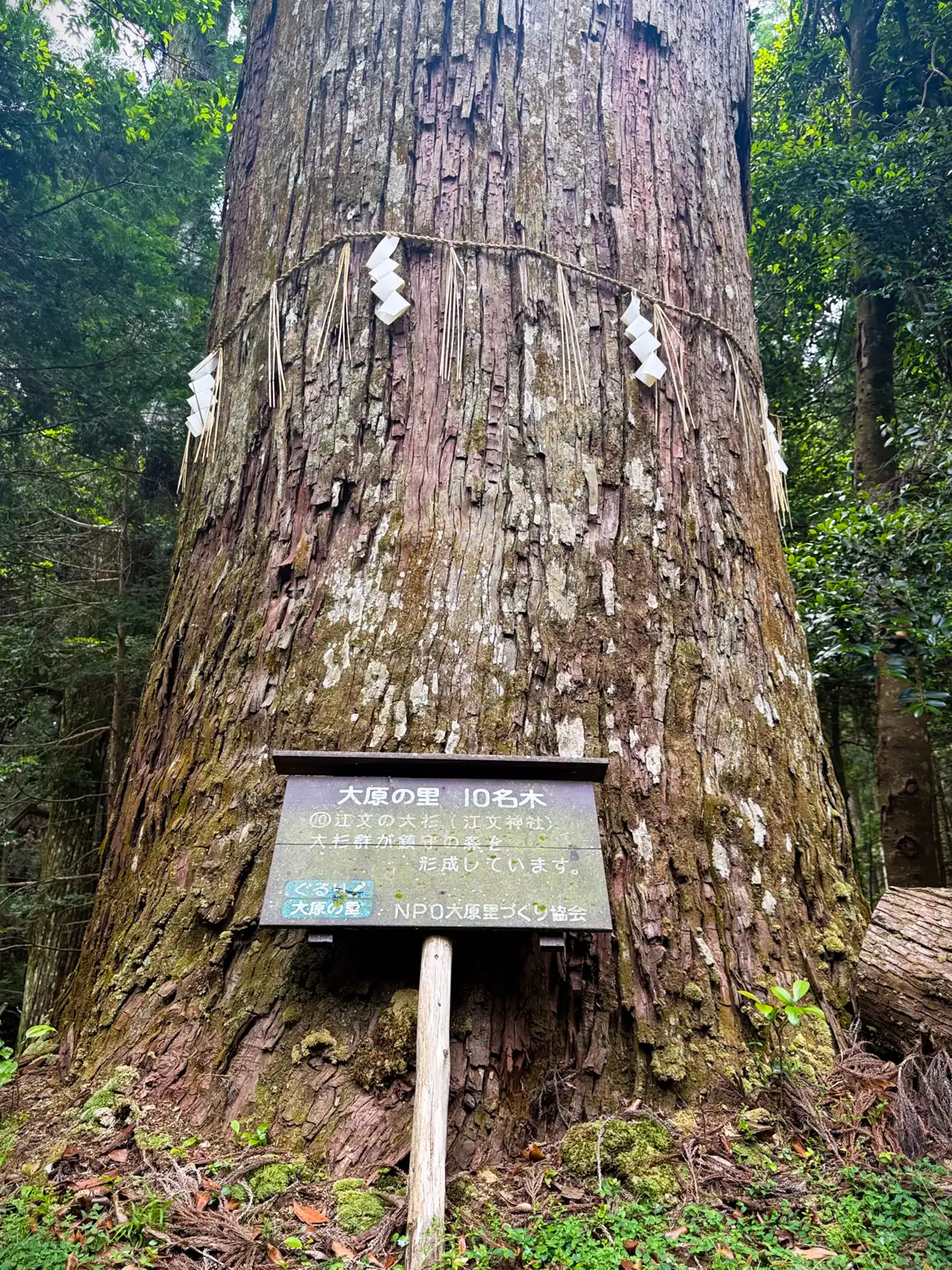
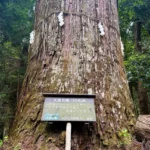
The Great Cedar of Ebumi (江文の大杉), girded with a shimenawa. A sign lists it as No. 10 of the “Ten Notable Trees of the Ohara District,” part of the stand of great cedars that forms the shrine’s guardian grove.
しめ縄を巻かれた「江文の大杉」。案内板には「大原の里 10名木」の⑩として記され、鎮守の杜をなす大杉群の一本とされている。
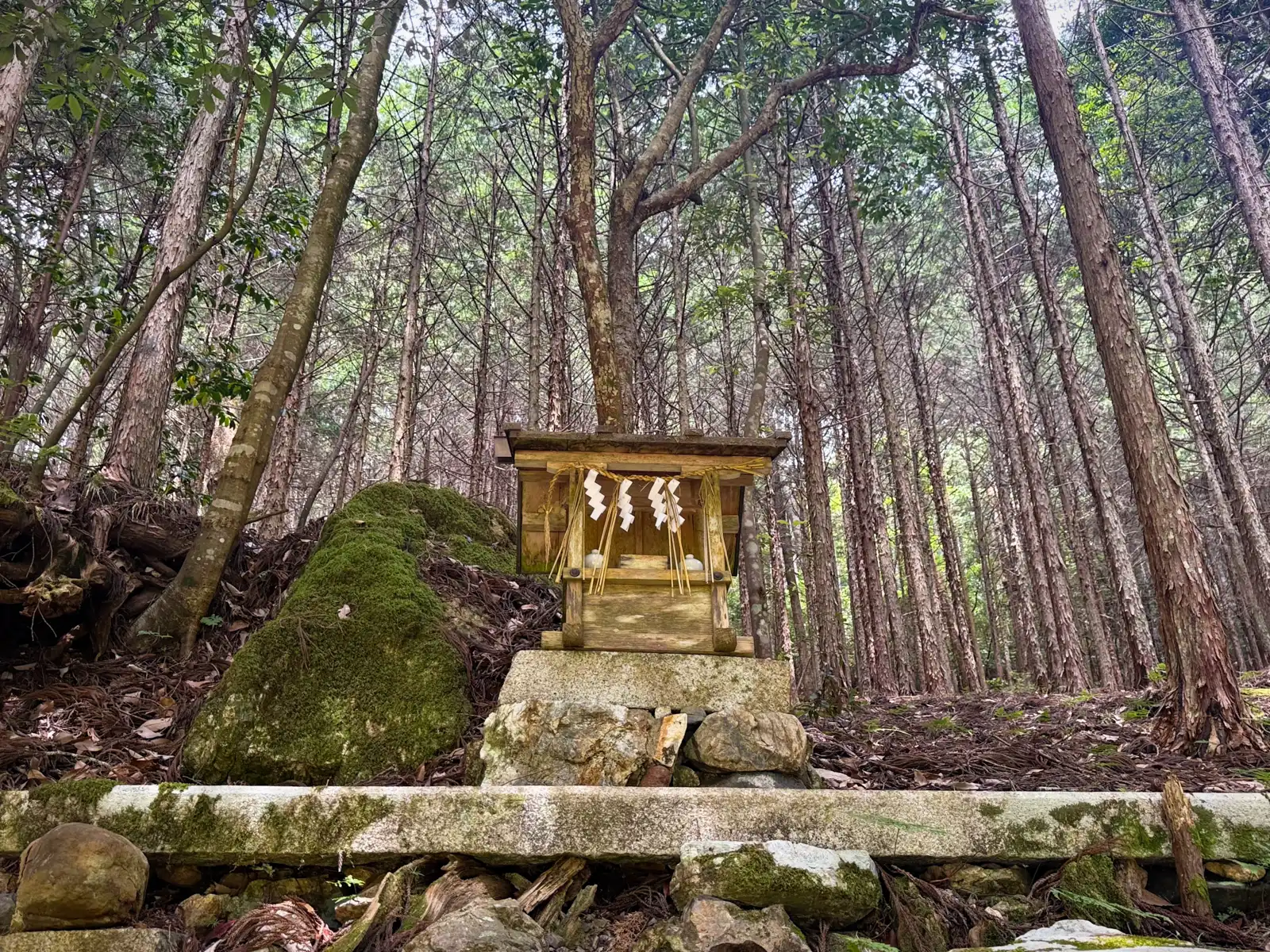
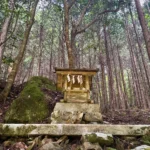
A small wooden auxiliary shrine (hokora) on a stone base, hung with its own shimenawa, set on the wooded slope among slender cedar trunks.
石の台座に載る小さな木造の祠(ほこら)。独自のしめ縄を掛け、細い杉木立の斜面に佇む。
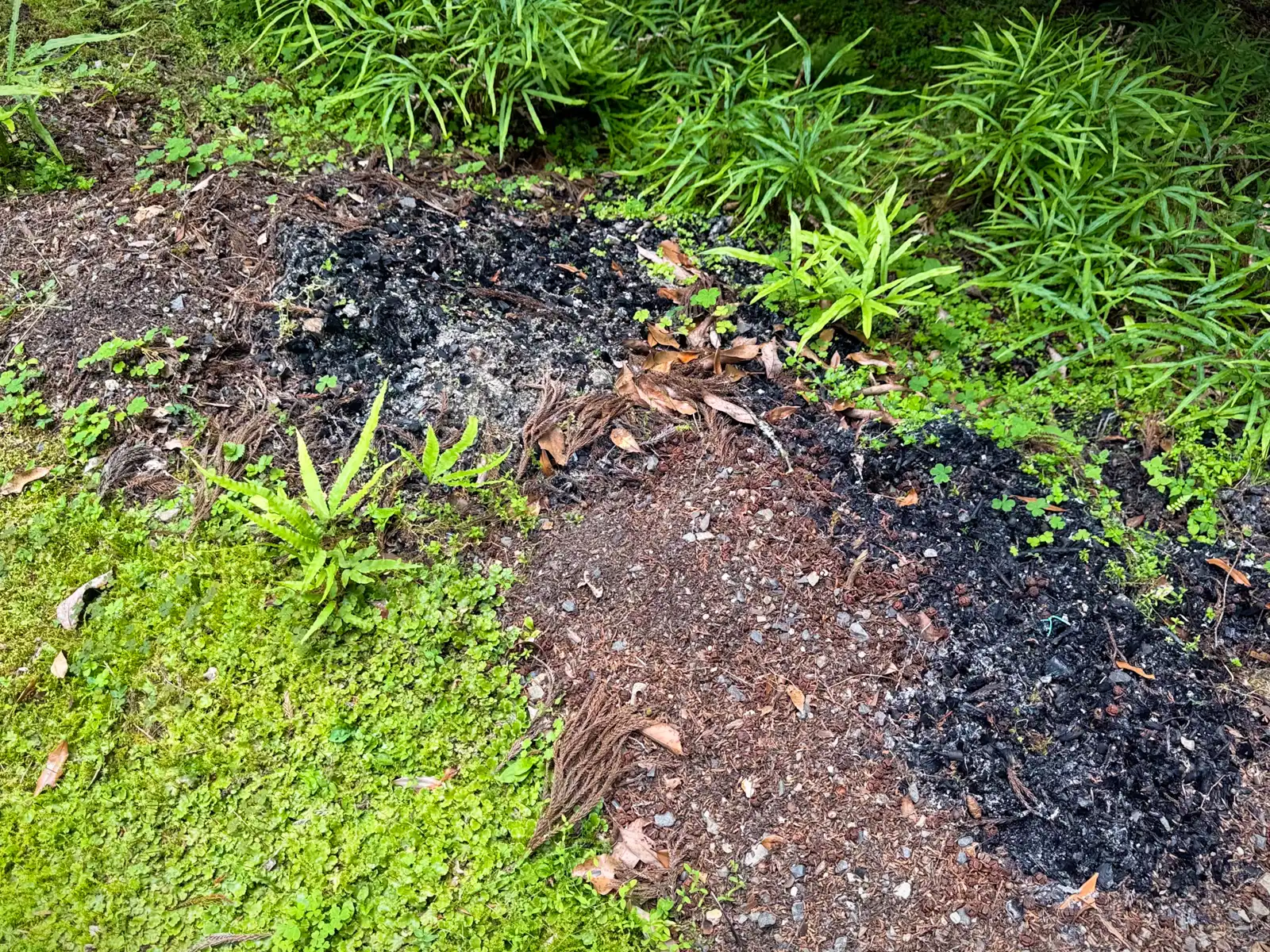
The forest floor beside the path — moss, ferns, and cedar litter broken by dark, charred patches of ground.
参道脇の林床。苔とシダ、杉の落ち葉の中に、黒く焦げた地面が点在する。
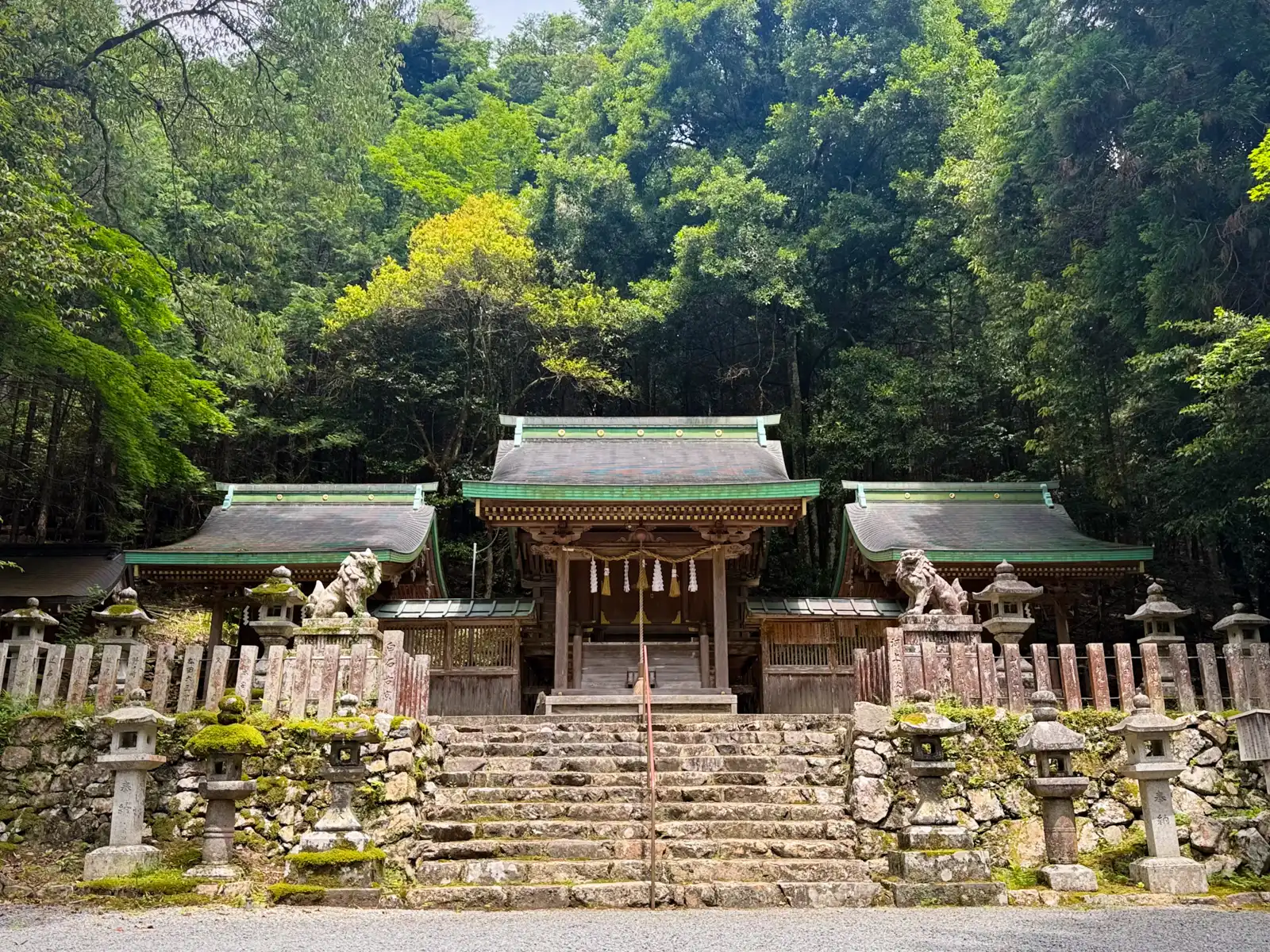
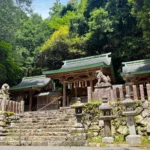
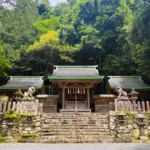
The heart of the shrine: the main hall at center, flanked by two side halls with copper-green roofs, guarded by a pair of komainu and approached by moss-flecked stone steps. Per the shrine’s own board, the main hall enshrines Uka-no-Mitama, with the wind and fire kami in the halls to either side.
社の中心。中央の本殿を、緑青色の屋根の脇殿二棟が挟む。一対の狛犬が守り、苔の点る石段が続く。案内板によれば、本殿に倉稲魂命、両脇の殿に風と火の神を祀る。
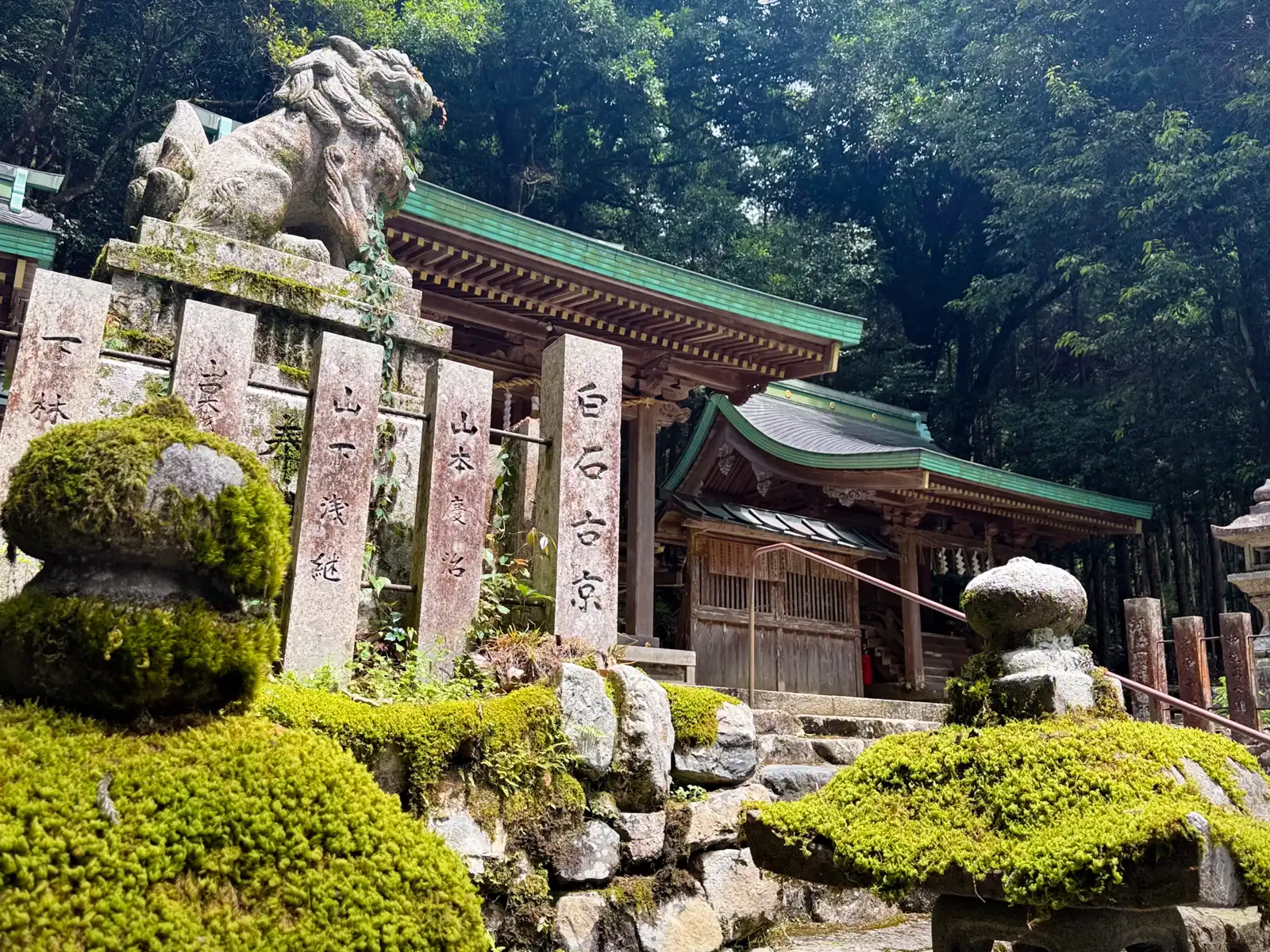
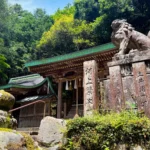
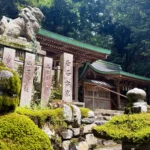
A moss-clad komainu perched above stone pillars inscribed with donors’ names, with a weathered stone lantern and a green-roofed side hall behind.
寄進者名を刻む石柱の上に載る、苔むした狛犬。背後には風化した石灯籠と緑青屋根の脇殿。
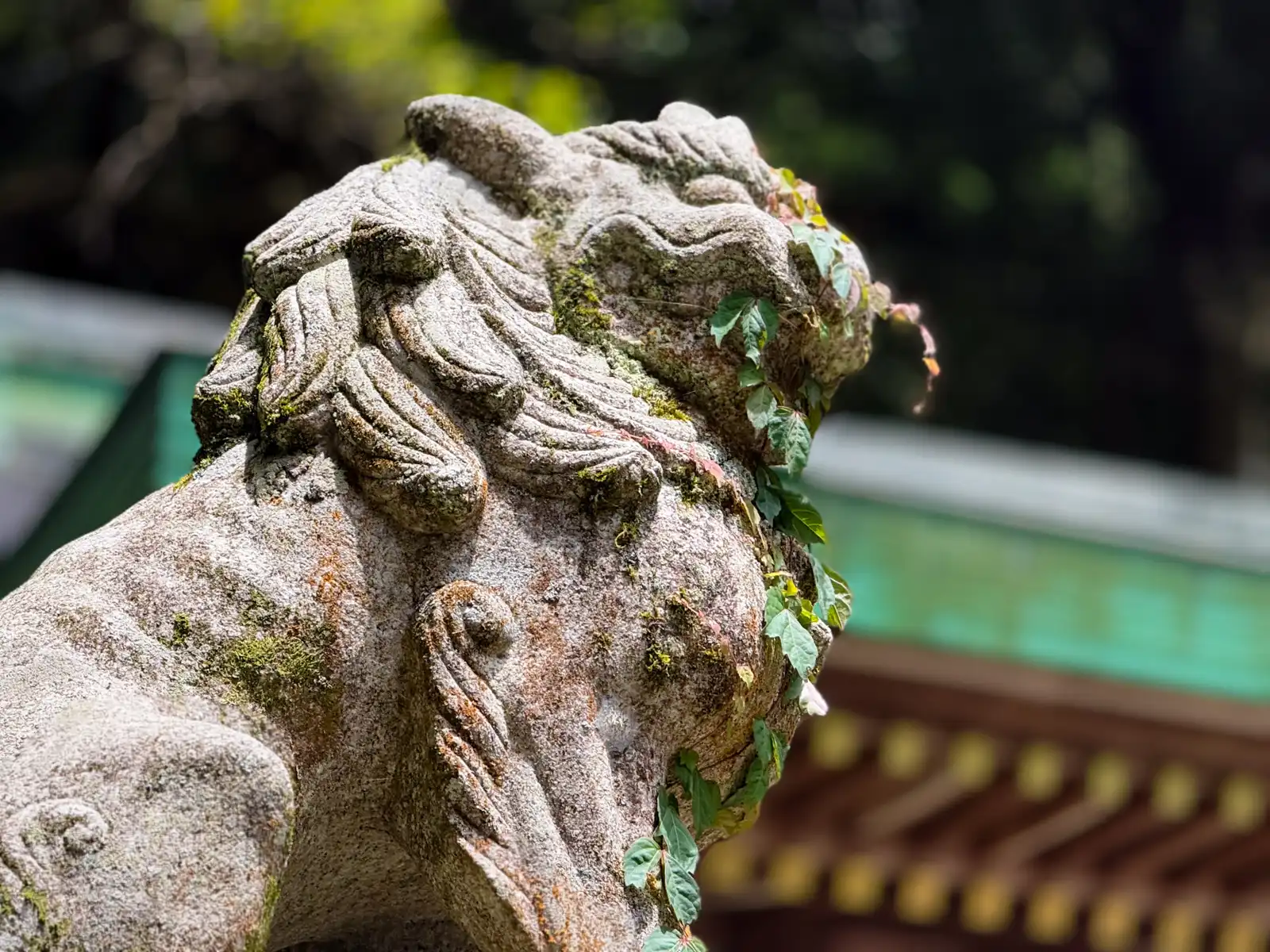
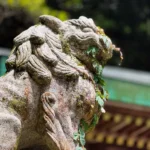
Close on a stone komainu’s curled mane, softened by moss and a creeping vine, the copper-green shrine roof blurred behind.
石造狛犬の巻き毛のたてがみに寄る。苔と絡まる蔓に覆われ、背後には緑青色の社殿の屋根がぼける。
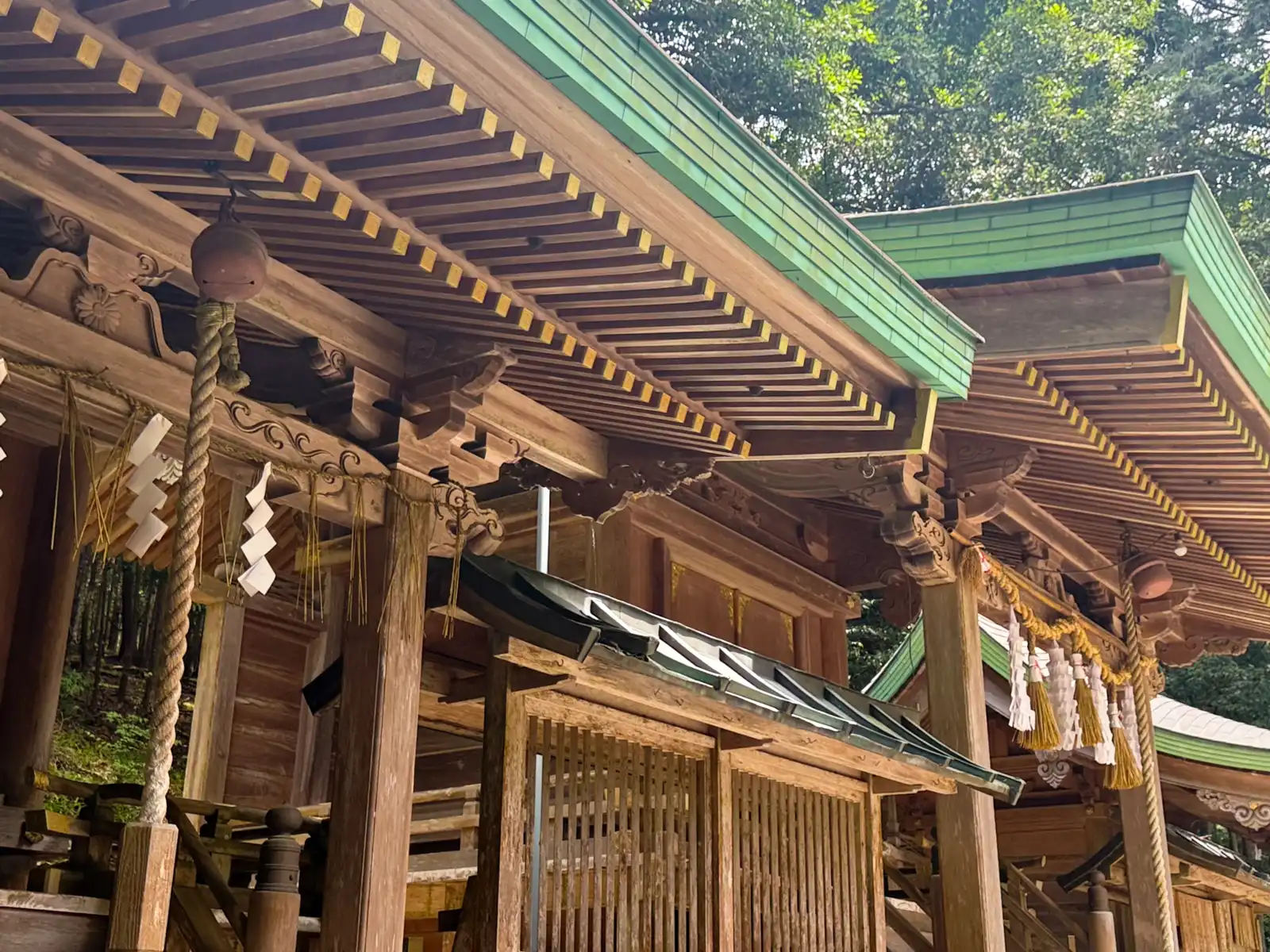
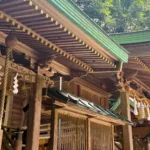
Carved brackets and gold-tipped rafters beneath the shine’s roofs, where a suzu bell hangs from its braided rope and paper shide. The main hall meets a side hall in a run of joinery.
緑青色の屋根の下、彫刻の組物と金箔の垂木先。組緒と紙垂を下げた鈴が吊るされる。本殿と脇殿の木組みが連なる。
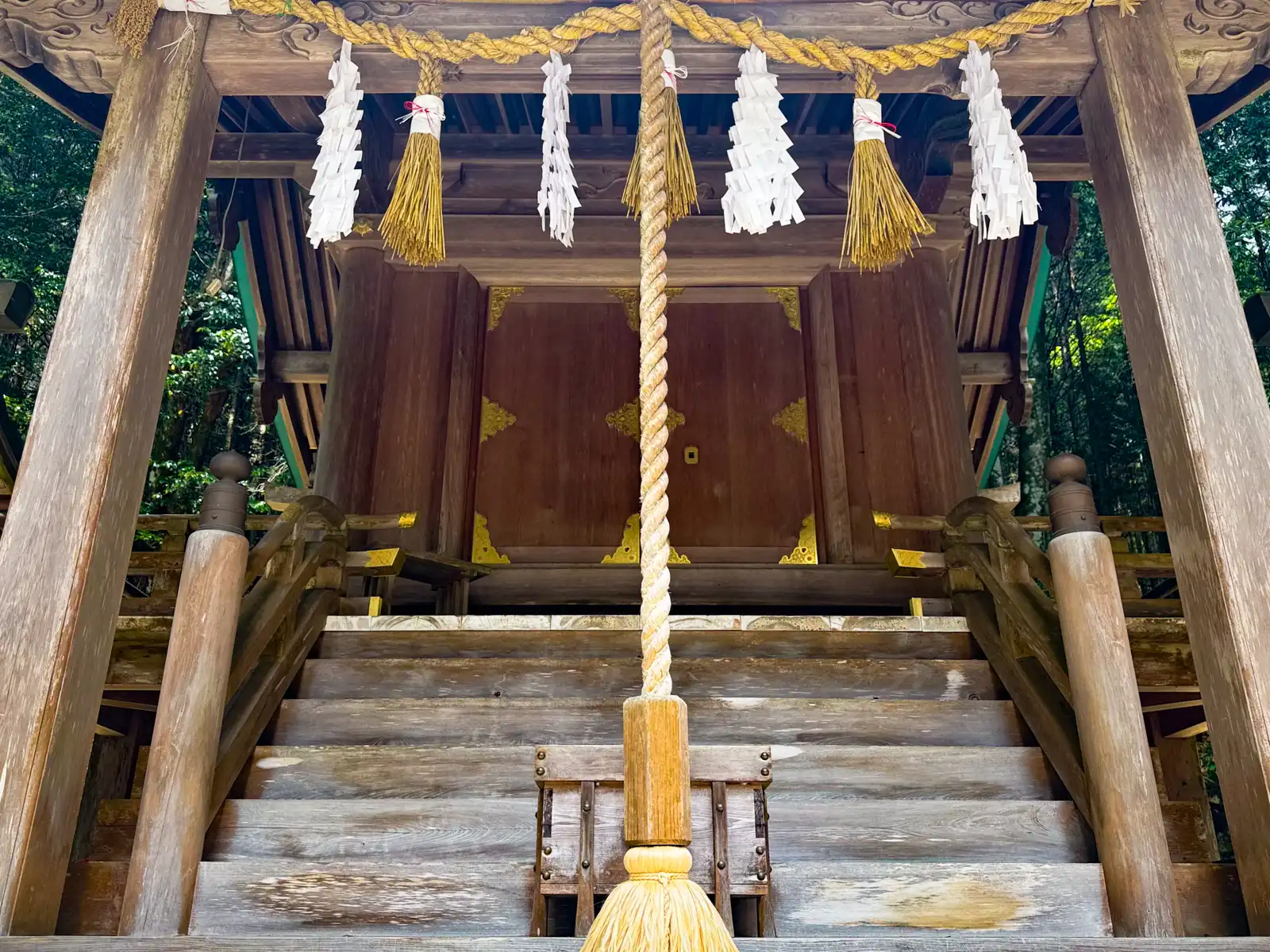
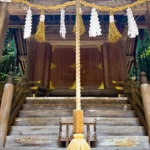
The front of the main hall: a thick braided bell-rope drops from a shimenawa strung with shide and straw tassels, above the closed doors with their gilded fittings.
本殿の正面。紙垂と藁の房を垂らした注連縄から太い鈴緒が下がり、金具で飾られた閉じた扉の上に掛かる。
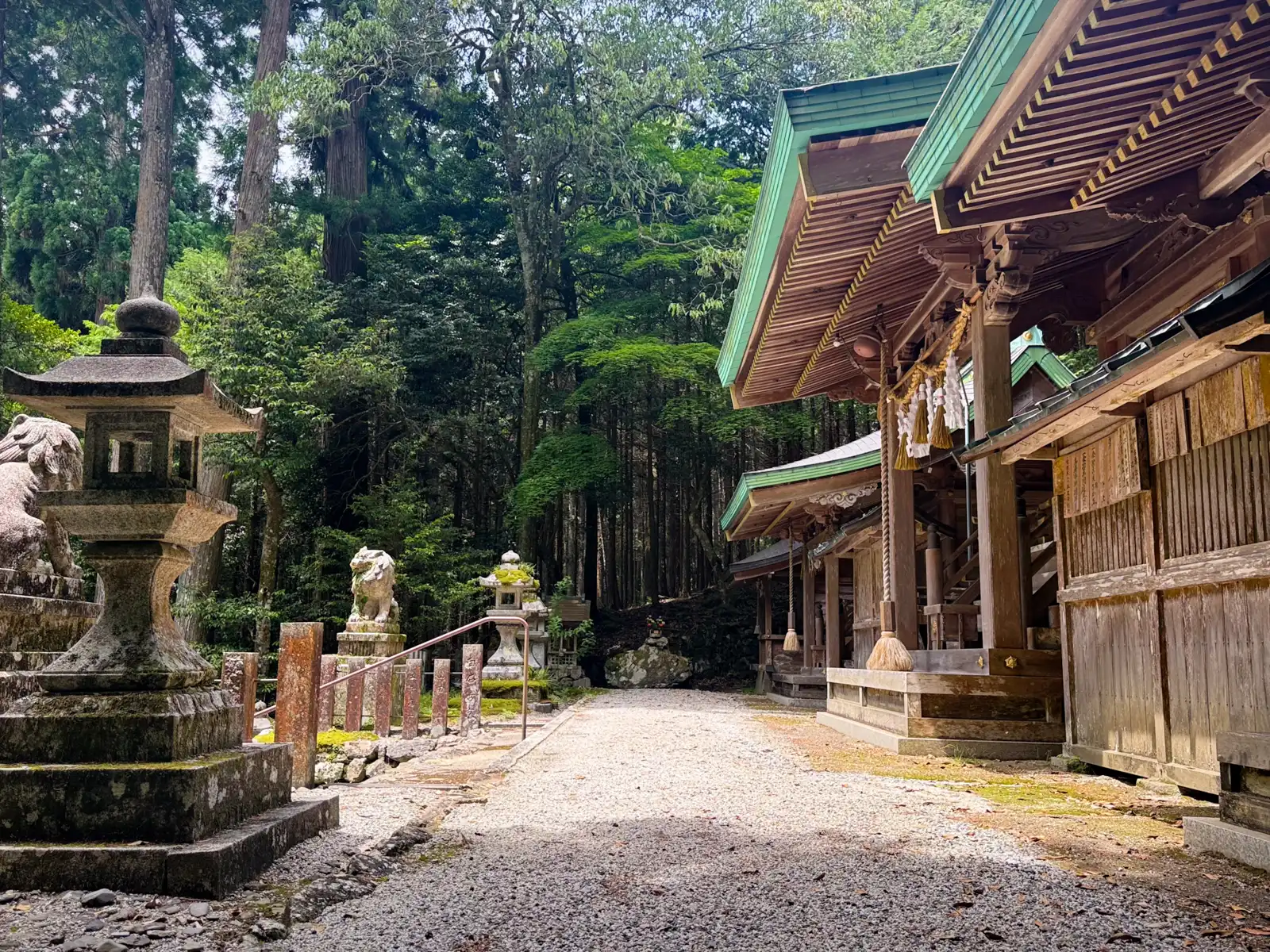
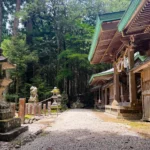
Looking along the halls from the gravel forecourt — copper-green roofs and hanging bell-ropes on the right, a large stone lantern and komainu on the left, cedars closing in behind.
玉砂利の前庭から社殿を見通す。右に緑青屋根と下がる鈴緒、左に大きな石灯籠と狛犬、背後に杉が迫る。
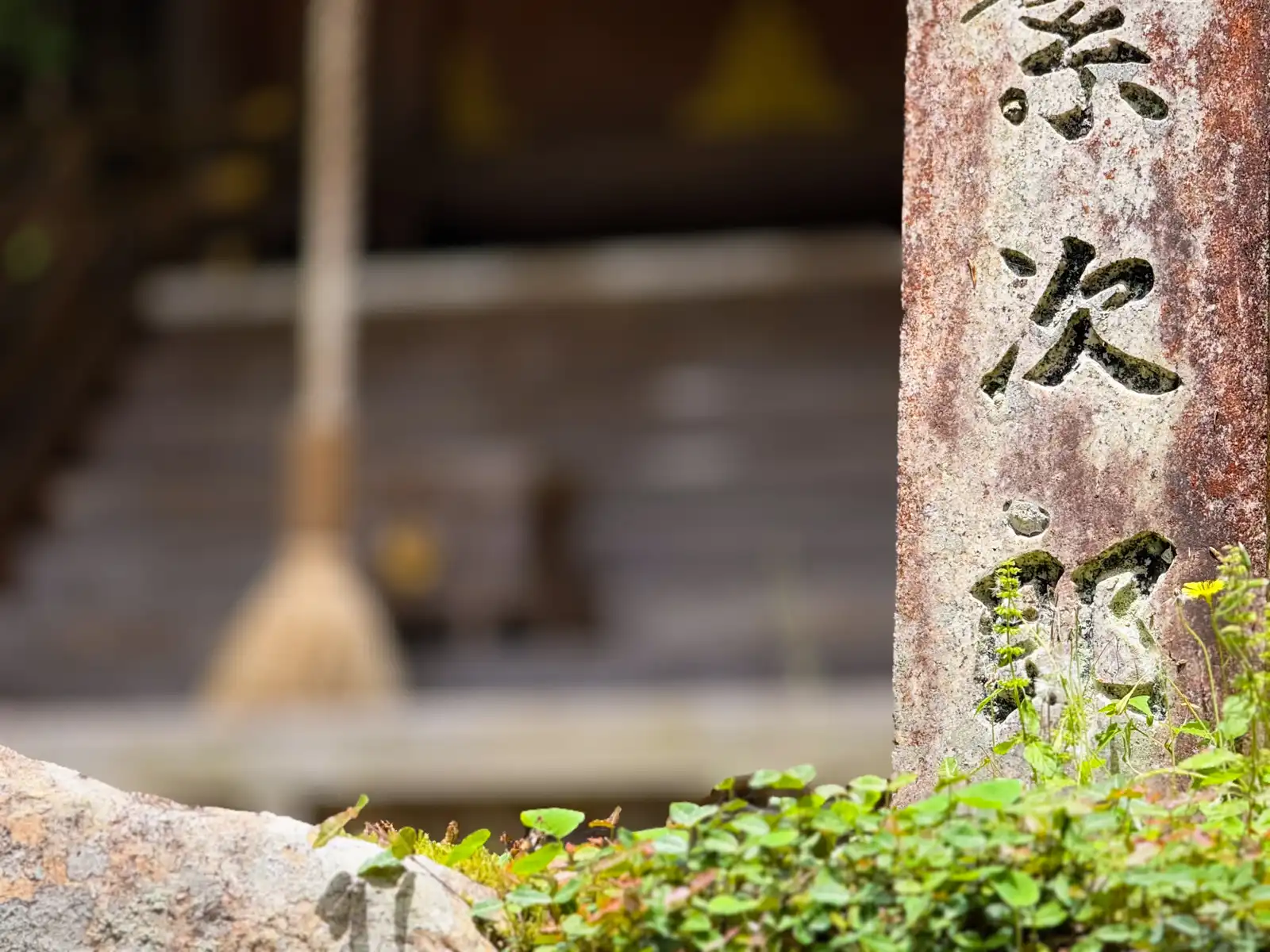
A donor’s name carved into a stone pillar — moss packed into the strokes, clover at its foot — while the hall’s bell-rope drifts out of focus behind.
石柱に刻まれた寄進者の名。字画に苔が詰まり、根元にはクローバー。背後に社殿の鈴緒がぼやける。
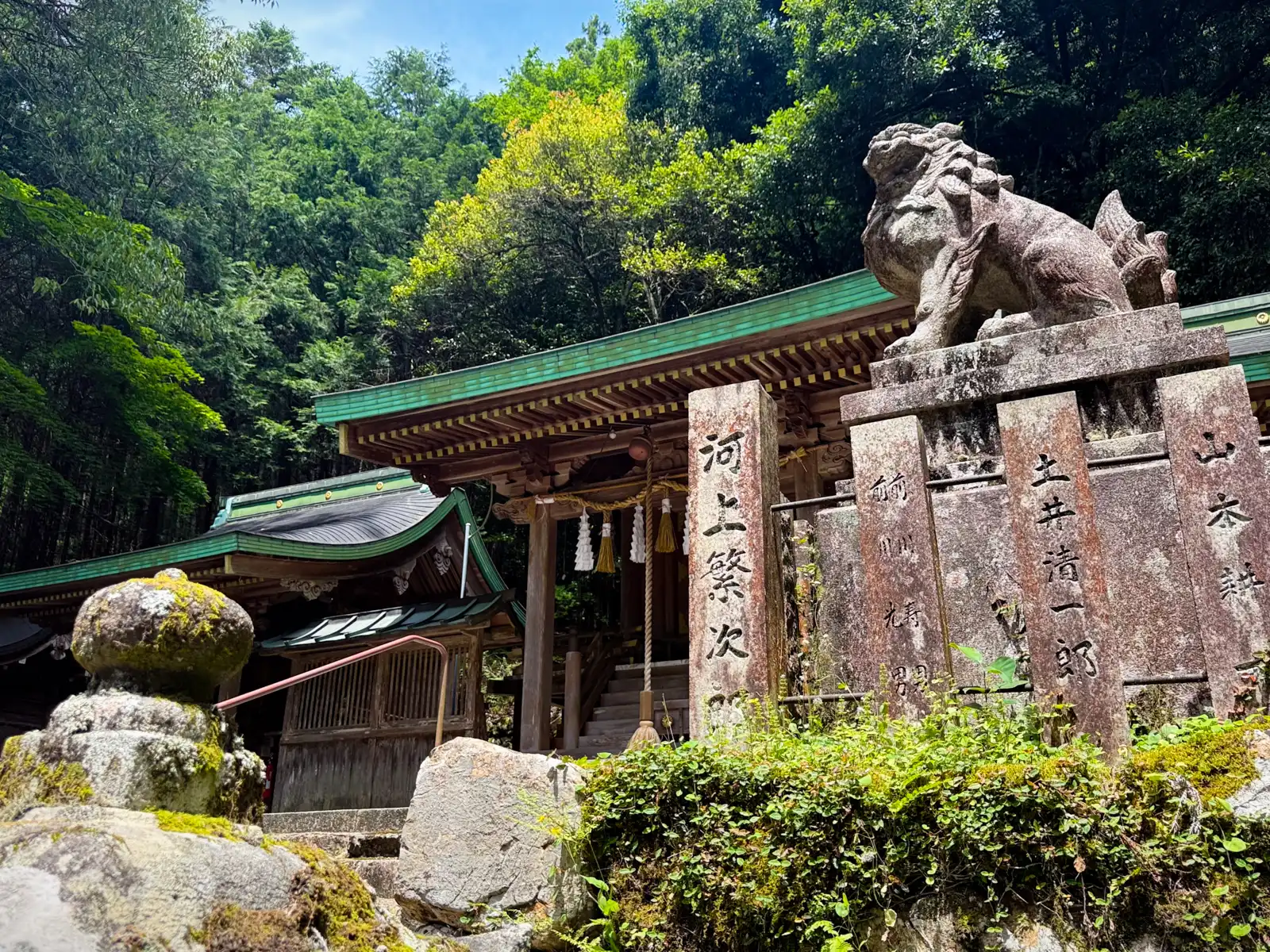
Sunlight on a komainu above inscribed donor pillars, the halls and their shimenawa behind, backed by the wooded slope.
寄進者名を刻む石柱の上の狛犬に日が差す。背後に緑青屋根の社殿と注連縄、青空と木々の斜面が広がる。
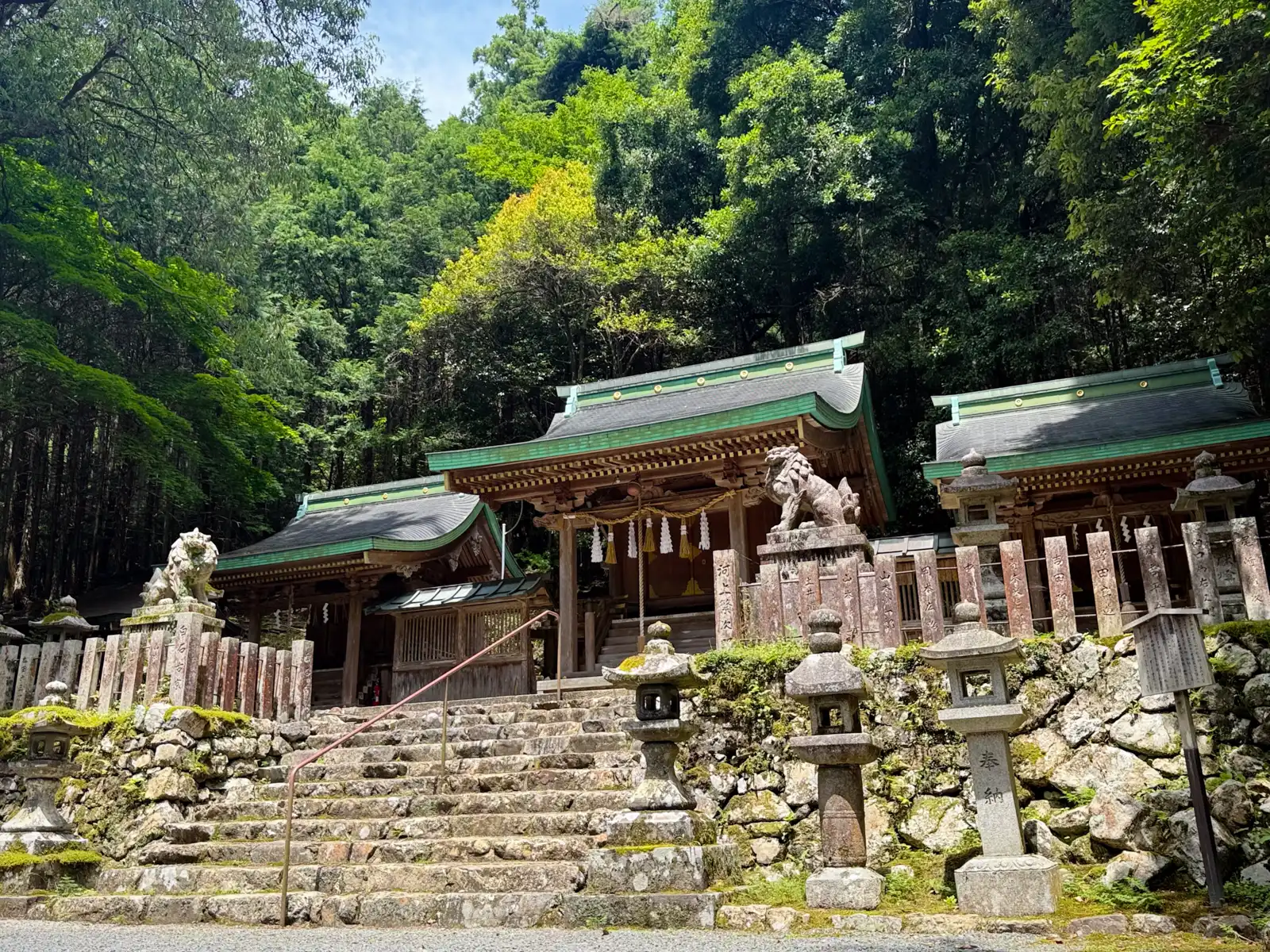
The shrine in full sun: the three halls with their copper-green roofs, a komainu at the steps, and rows of stone lanterns and donor pillars along the masonry, below the forested mountainside.
陽光を浴びる社殿。緑青屋根の三棟、石段脇の狛犬、石垣沿いに並ぶ石灯籠と寄進柱。背後は森の山肌。
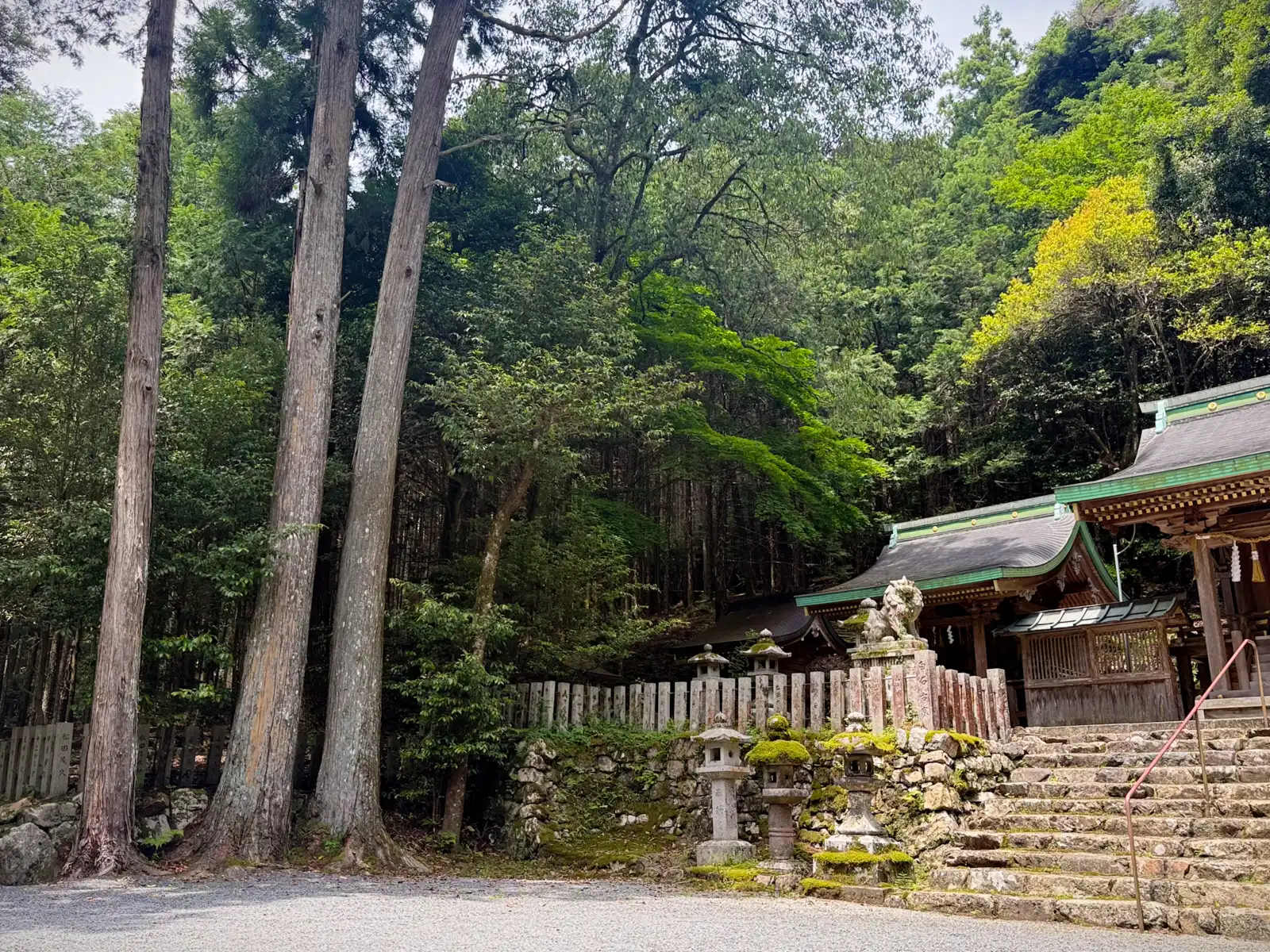
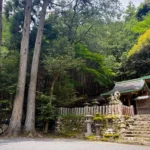
Towering cedars stand beside the shrine, giving a sense of the sacred grove’s scale against the halls, steps, and lanterns at right.
社の傍らにそびえる杉の大木。右手の社殿・石段・灯籠と対比して、鎮守の杜の大きさが伝わる。
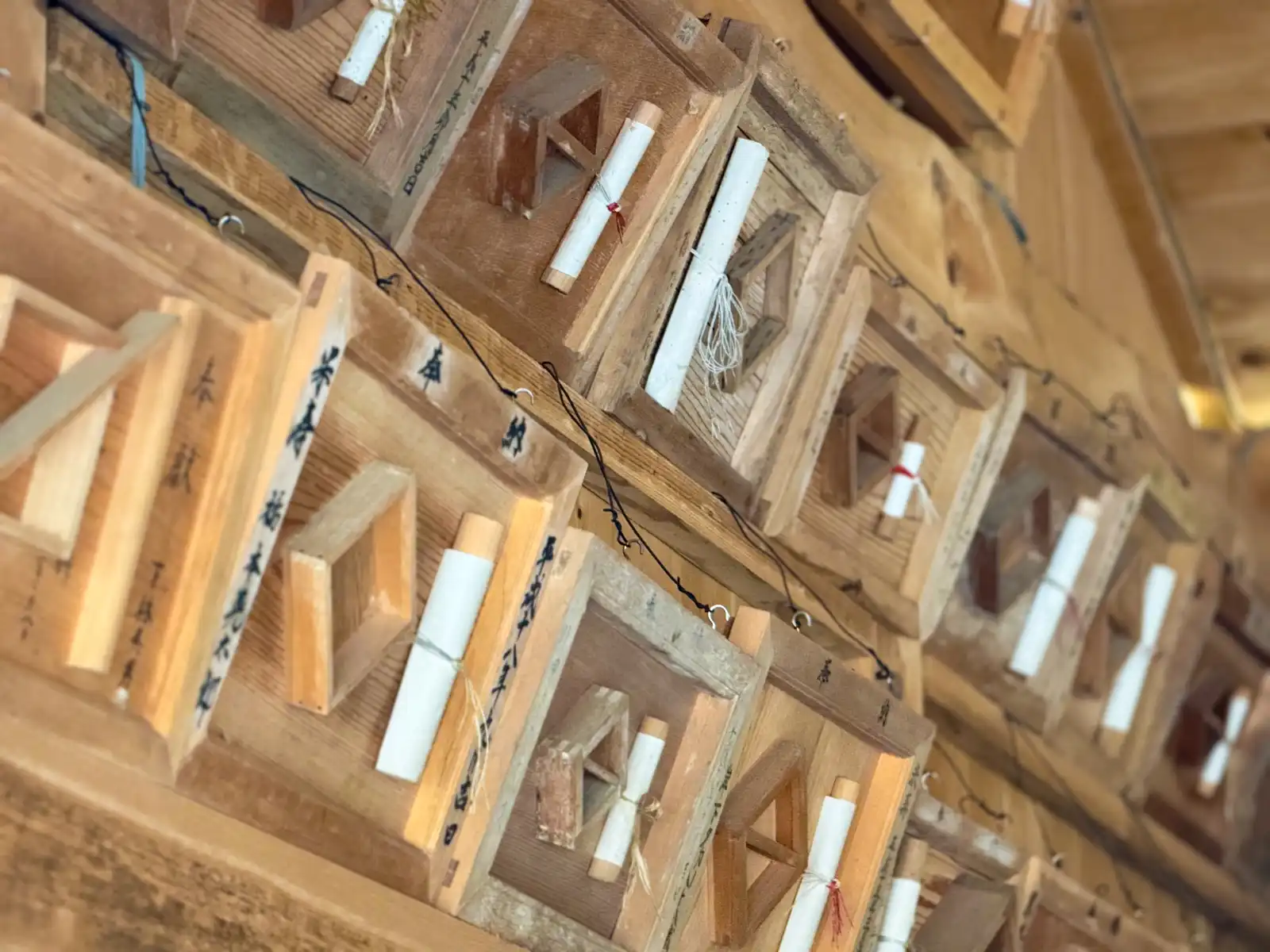
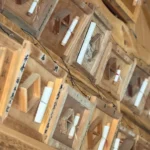
Rows of wooden dedication plaques mounted under cover, each cradling a rolled paper slip and inked with a name — offerings left at the shrine.
軒下に掛け並べられた木の奉納札。それぞれ丸めた紙を挟み、名が墨書されている。社に納められた奉納の品。
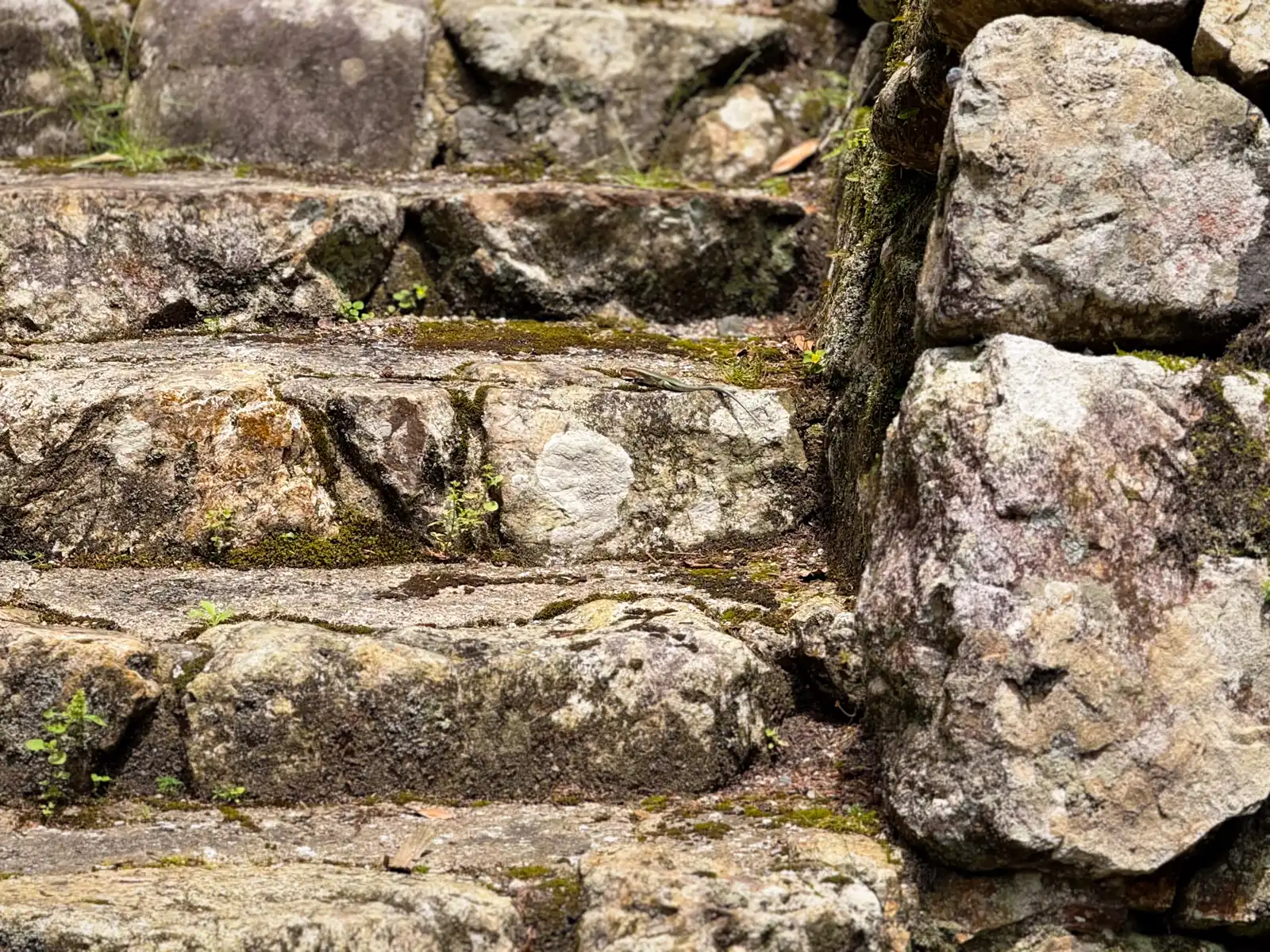
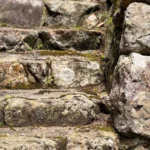
Mossy stone steps leading up to the shrine halls. Bonus points if you can spot the little lizard!
社殿へと続く、苔むした石段。石段の上の小さなトカゲ、見つけられたらお手柄!
The weathered wooden torii at the entrance to Ebumi Shrine, its plaque reading 江文神社. A grass-covered path leads in from the edge of Ohara toward the forested foot of Mt. Konpira.
江文神社の入口に立つ、風化した木の鳥居。扁額には「江文神社」とある。大原の集落のはずれから、金毘羅山の麓の杜へと草の参道が続く。